The Valencian Community is home to engineering firms with advanced expertise in solving challenges during extreme rainfall events, exporting their technology both across Spain and internationally. For over two decades, it has established itself as a knowledge hub in this field, drafting projects that incorporate flood protection measures, conducting complex hydrological and hydraulic studies and modeling, and analyzing the impacts of climate change, among other areas.
Along these lines, the Valencian engineering firm Vielca Ingenieros is currently working on six projects centered on a common priority: flood risk management. The objective of this work is to size and design infrastructure capable of better protecting communities against flooding.
The DANA, Still Present
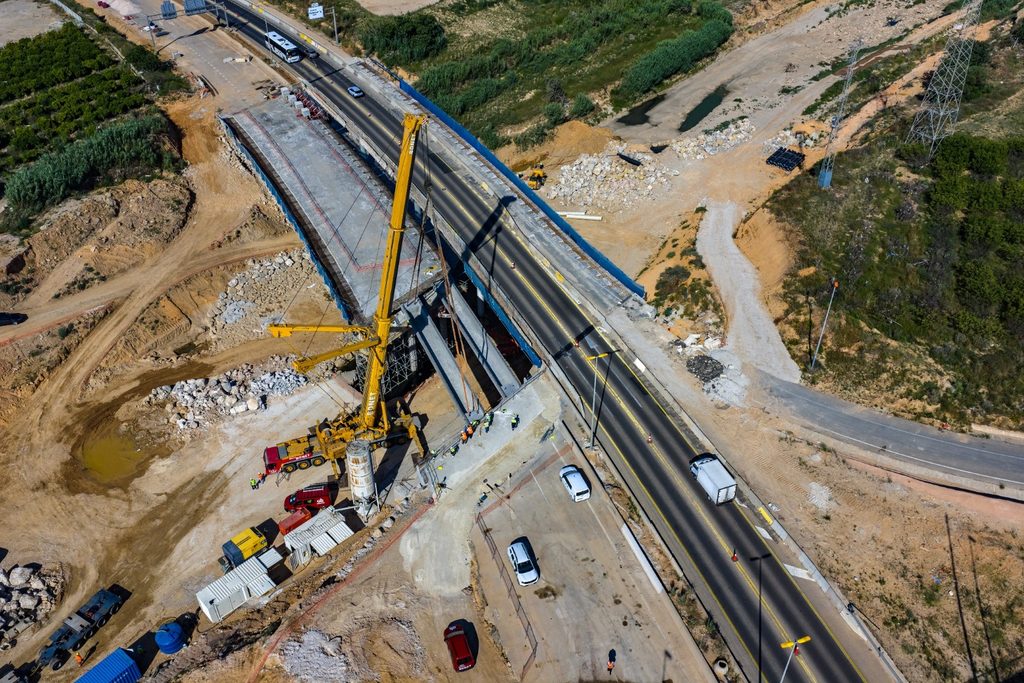
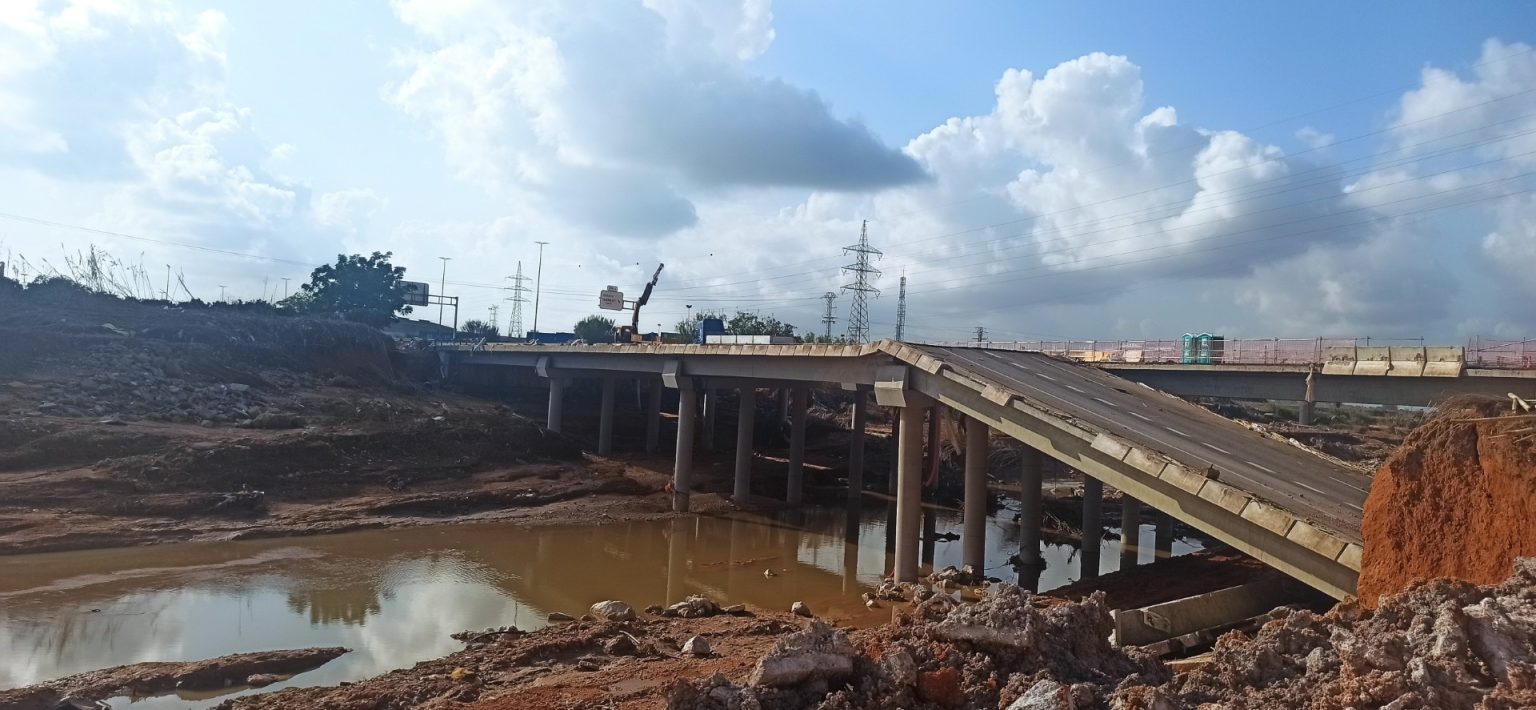
Among the ongoing works, those directly linked to the DANA stand out: site supervision and health and safety coordination for interventions within the Public Hydraulic Domain as part of emergency rehabilitation works on the CV-33 and CV-36 highways, as well as the repair of the CV-33 viaduct over the Poyo Ravine (Barranco del Poyo), within the municipalities of Torrent and Picanya.
As a result of the DANA, one of the abutments of the bridge crossing the Poyo Ravine on the CV-33—specifically on the viaduct heading toward Valencia—collapsed, causing the supported deck span to fall. The works currently underway involve rehabilitating the span, building a new abutment with deeper foundations, and reconstructing the piers and intermediate supports.
As part of this reconstruction, a detailed flood risk study was prepared for the Júcar Hydrographic Confederation (CHJ, O.A.) to ensure that the ongoing intervention does not compromise the channel’s hydraulic capacity.
Additionally, Vielca is conducting several flood risk studies on roads and railways damaged by the DANA to enhance their hydraulic capacity and prevent water from overtopping or turning these structures into barriers. These assessments account for a 500-year return period and evaluate structural behavior under the extreme water discharge recorded on the tragic date of October 29, 2024.
Beyond the DANA, and within the Valencian Community itself, engineers from the firm are designing the construction project for two stormwater detention basins in La Pobla de Vallbona.
Cuenca and Palma de Mallorca
In Motilla del Palancar, the Júcar Hydrographic Confederation (O.A.), an agency of the Ministry for the Ecological Transition and the Demographic Challenge, awarded the Valencian firm the contract to draft the flood risk management adaptation project for this municipality in Cuenca.
Meanwhile, the company is currently working for Palma de Mallorca’s Municipal Water and Sewerage Company (EMAYA) on drafting a master plan for managing wastewater and combined sewer overflows during intense rainfall events. Funded by European NextGenerationEU funds, the initiative aims to prevent torrential summer storms from impacting local beaches. Similarly, the firm has been tasked with updating the Duanes-Baluard-Portitxol primary transmission and management system for storm-driven combined sewage flows to comply with new regulatory standards.
International Experience
Vielca has extensive experience assessing the impacts of heavy rainfall events that trigger extreme flash flooding, primarily in urban environments and torrential riverbeds. For instance, in 2018 it developed the Master Plan for the Sustainable Management of Stormwater in the San Salvador Metropolitan Area (flood defense infrastructure). It also designed several retention and containment structures—reservoirs and dams—to mitigate flood impacts in the region, which is particularly prone to flash floods and mudslides.
In recent years, the firm has completed numerous sanitation, water supply, water treatment, and distribution projects across Central America, as well as studies on saltwater intrusion and aquifers, alongside the design of reservoirs, river channelization, bridges, and viaducts. These works have been carried out in Nicaragua, El Salvador, Honduras, and Costa Rica—where the company maintains permanent offices—along with a branch in Guatemala.
Hydraulic Engineering as a Core Pillar
Composed of companies spanning engineering, architecture, environmental services, renewable energy, and testing laboratories, Grupo Vielca holds significant standing in the field of hydraulic engineering. With a track record of over 35 years and a workforce of 80 employees in Spain and 550 across its branch offices, the group generated €20 million in revenue in 2024, approximately €16 million (around 80%) of which came from international markets. Its technical background and specialization enable it to execute projects of any scale related to water management, supply, and sanitation.